

PN vs PDRN: What Is the Difference?

Aug
Skin Booster Science
PN and PDRN are used in regenerative and aesthetic medicine to support skin quality and tissue recovery. Because both are derived from deoxyribonucleic acid (DNA), the terms are sometimes used as if they mean the same thing. They do not.
The practical difference lies mainly in chain length, molecular weight, physical behavior, and the clinical emphasis of the finished formulation.
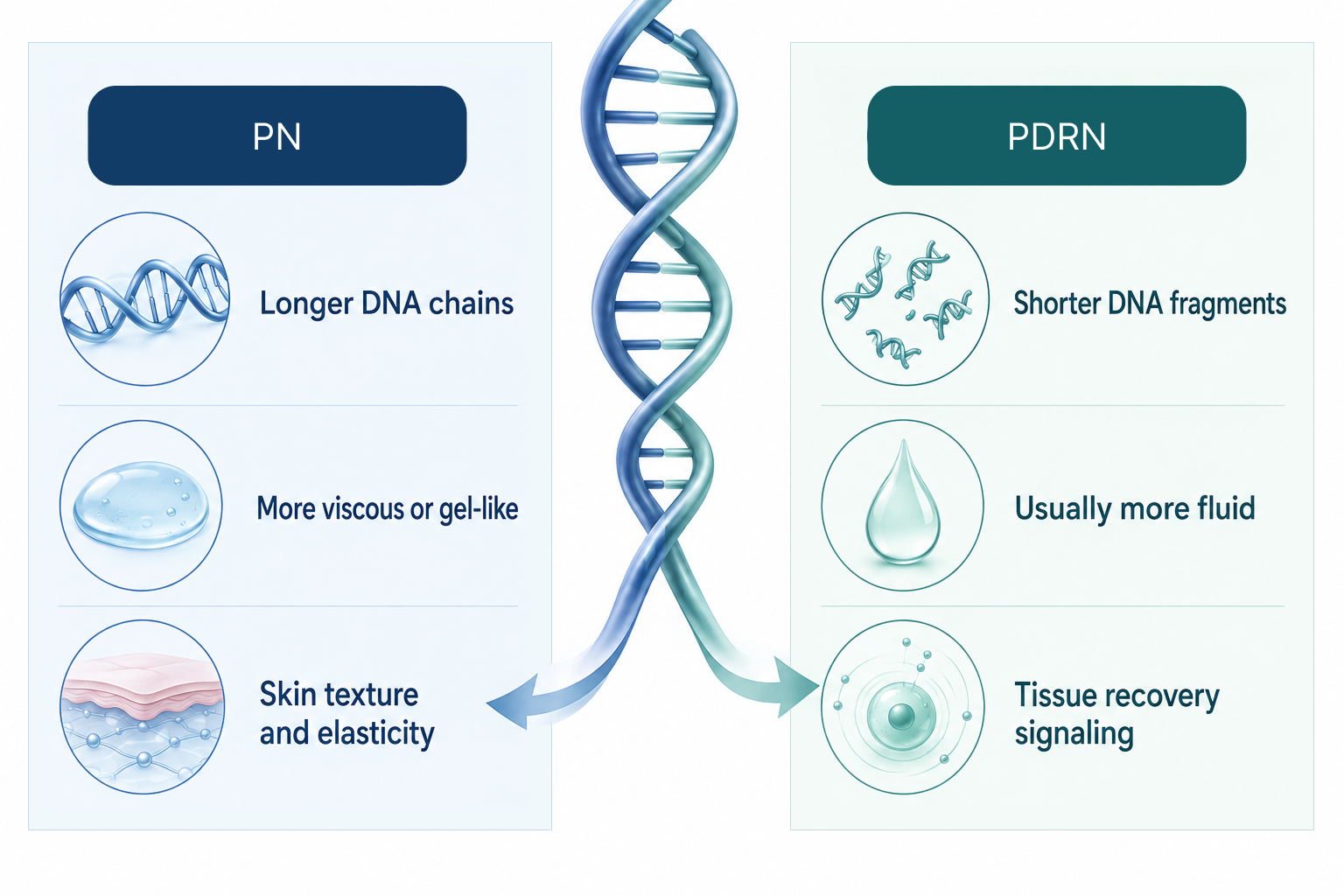
PN and PDRN Comparative Table
| Characteristic | PN | PDRN |
|---|---|---|
| Full name | Polynucleotide | Polydeoxyribonucleotide |
| Typical source | Purified salmonid DNA | Purified salmonid DNA |
| Molecular profile | Relatively longer DNA chains | Relatively shorter DNA fragments |
| Physical behavior | Often more viscous or gel-like | Usually more fluid |
| Clinical emphasis | Skin texture, elasticity, and tissue quality | Regenerative signaling and tissue recovery |
| Volume effect | Usually minimal | Usually minimal |
Where Do PN and PDRN Come From?
Most PN and PDRN used in medical and aesthetic products are manufactured from DNA-rich reproductive material of salmonid fish, such as salmon or trout. Sperm cells, milt, or testicular tissue may be used because they provide a concentrated source of DNA.
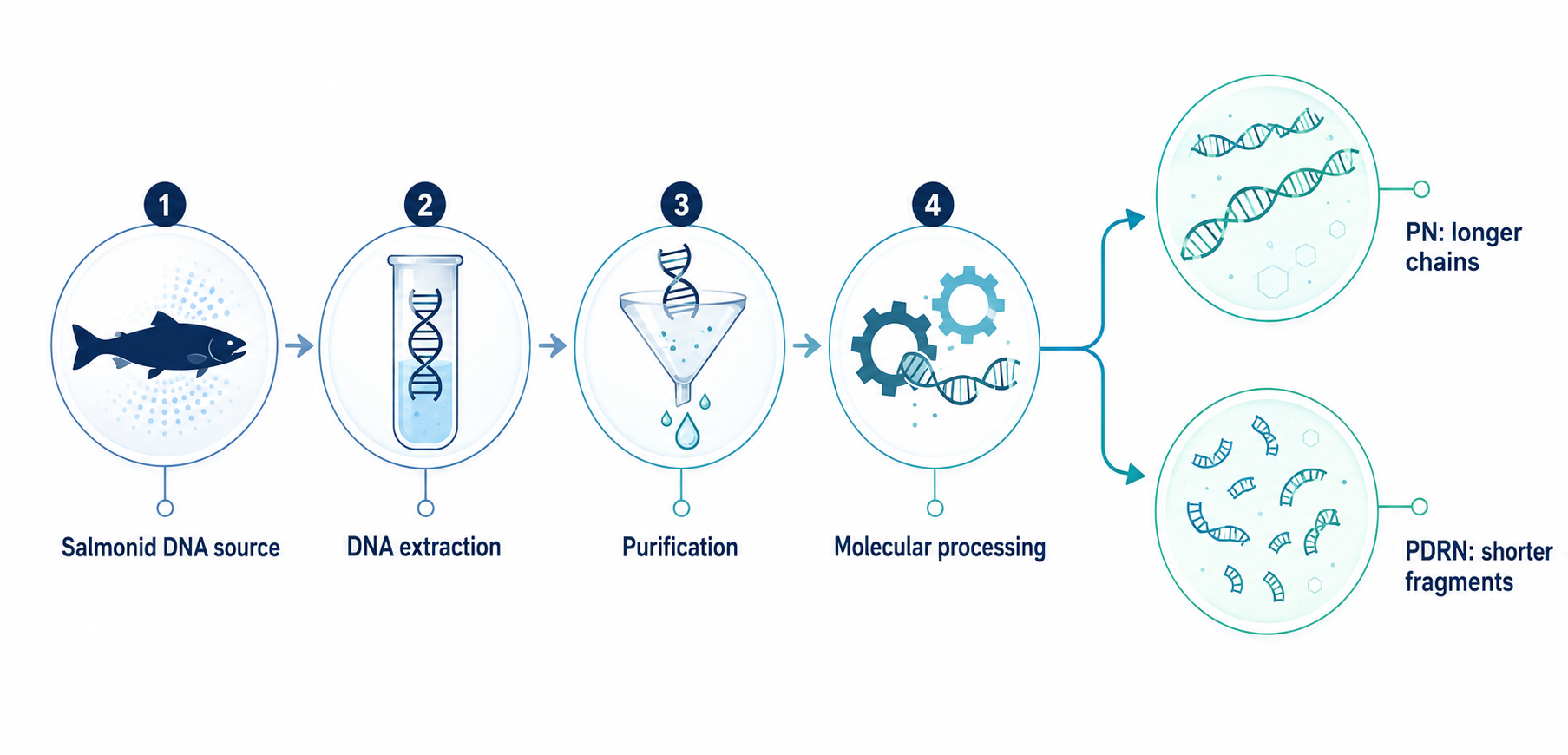
How Is the DNA Extracted and Purified?
Manufacturing begins by separating DNA from the source cells. The material then undergoes controlled purification to remove proteins, peptides, lipids, and other cellular components. Depending on the process, additional steps may include filtration, molecular fractionation, heat treatment, and sterilization.
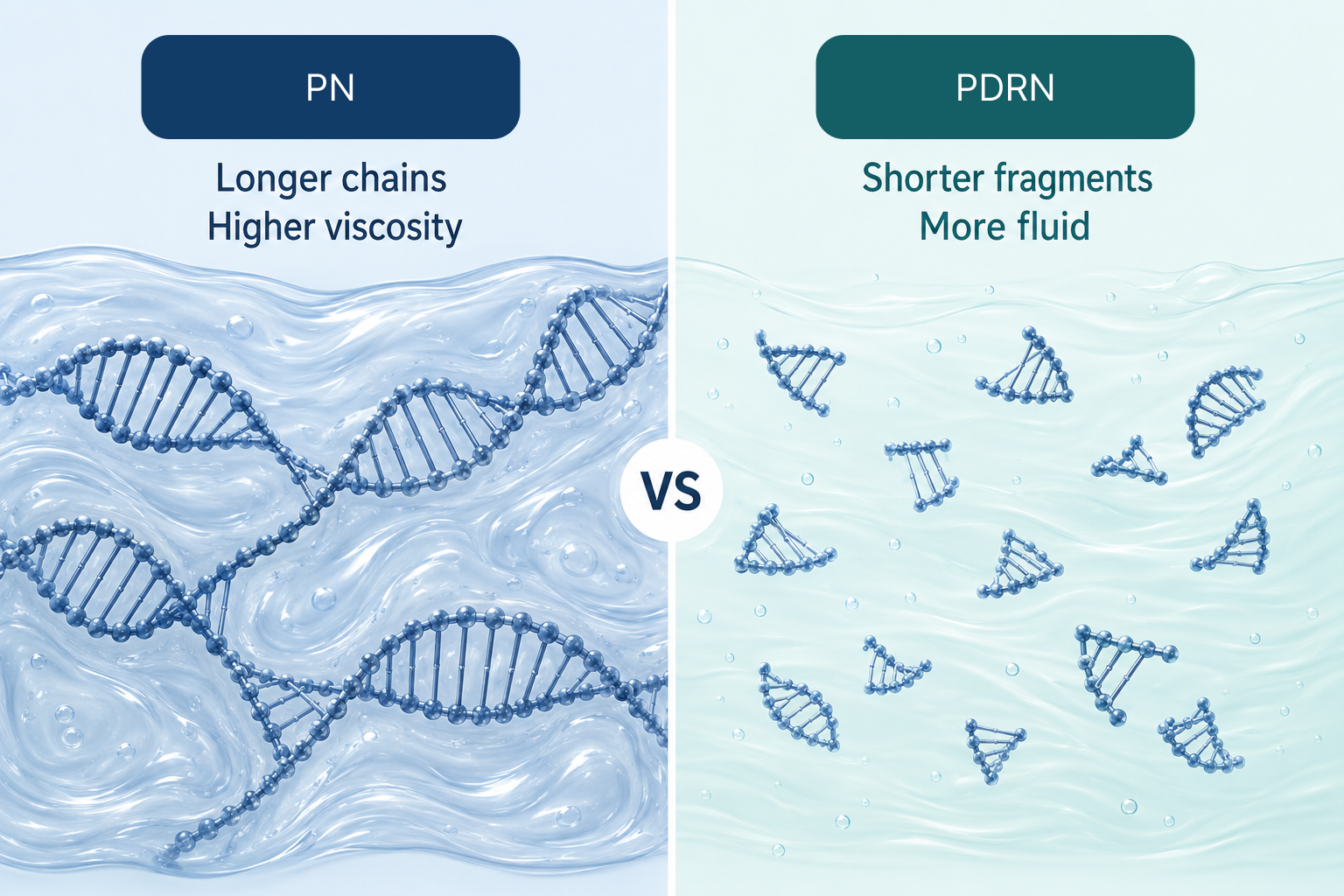
The purified DNA is then processed to achieve the intended molecular-weight distribution. A PN formulation generally retains relatively longer chains. PDRN is generally produced as a mixture of shorter fragments through controlled fragmentation and size selection.
The Key Molecular Difference
PN: Longer DNA Chains
Longer chains tend to create greater viscosity and viscoelasticity, so many PN formulations behave more like a soft gel within tissue. In aesthetic use, PN is therefore associated mainly with gradual improvement in skin texture, elasticity, and overall tissue quality.
PDRN: Shorter DNA Fragments
PDRN is usually more fluid. It is studied mainly for biological effects related to tissue repair, including adenosine A2A receptor signaling and the nucleotide salvage pathway. These mechanisms may support the signaling environment of recovery and provide nucleotide components that cells can reuse.
What Does This Mean in Clinical Practice?
PN is commonly considered when the treatment goal is gradual improvement in thin or crepey skin, fine lines, elasticity, or texture without significant volumization.
PDRN is more often positioned for regenerative support, stressed or photoaged skin, and recovery-oriented protocols.